Have you always wanted to learn piano but never had the chance?
Maybe you took lessons as a child and stopped. Maybe you’ve always loved music but never learned to play. Or perhaps you simply have a piano or keyboard at home and have decided that it’s finally time to use it.
Whatever your reason, you’re not too old to learn.
Adult piano lessons are different from childhood lessons in some important ways. You don’t need to spend years learning pieces you don’t enjoy, and you don’t need to become a concert pianist to get something meaningful from playing.
A good adult piano lesson should help you learn music you enjoy while gradually building your technique, confidence, and understanding of the instrument.
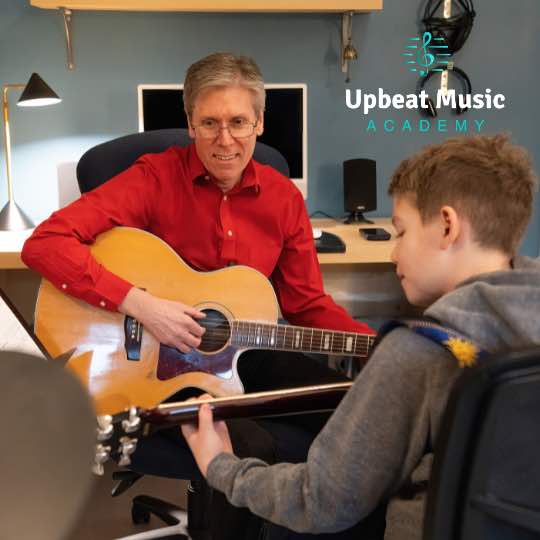
At Upbeat Music Academy in Glenmore, Kelowna, Lora Wentworth teaches private piano lessons for adults as well as children and teens. With more than 25 years of teaching experience, Lora can adapt lessons to a student’s experience level, interests, and goals.
What Are Adult Piano Lessons Like?
Adult piano lessons are usually relaxed, practical, and focused on the individual student.
You might work on:
- Learning songs you enjoy
- Reading music
- Chords and chord progressions
- Piano technique
- Rhythm and timing
- Scales and exercises
- Music theory
- Ear training
- Improvisation
- Playing melodies and accompaniment
- Songwriting or composition
You don’t have to choose between learning “proper” piano technique and playing music you enjoy.
A good teacher can combine the two.
For example, if you want to learn pop songs, your lessons can use those songs to introduce chords, rhythm, reading, and technique. If you are interested in classical music, lessons can focus more heavily on reading, technique, repertoire, and interpretation.
The important thing is that your lessons have a clear purpose for you.
What Happens During Your First Piano Lesson?
Your first lesson is usually more about getting to know your starting point than trying to teach you everything at once.
Your teacher may ask about:
- Your previous musical experience
- Whether you’ve played piano before
- The type of music you enjoy
- What you would like to be able to play
- Whether you own a piano or keyboard
- How much time you expect to practise
- Whether you have specific goals
If you’ve never played before, that’s completely fine.
You don’t need to know how to read music before your first lesson.
You also don’t need to arrive knowing scales, chords, or musical terminology.
Your teacher will start from where you are.
What If I Haven’t Played Piano Since Childhood?
This is very common.
You may remember a few notes or pieces from childhood but feel like you’ve forgotten everything else.
That’s okay.
You may actually find that some things return more quickly than expected.
Even if you have forgotten how to read music, your previous experience may give you a starting point for rhythm, coordination, or understanding how the keyboard works.
There is no need to feel embarrassed about starting again.
Adult lessons can be adjusted to your current ability rather than assuming you remember what you learned years ago.
What If I’m a Complete Beginner?
You can start piano as an adult with no previous musical experience.
Your first lessons may focus on simple skills such as:
- Finding notes on the keyboard
- Understanding finger numbers
- Learning basic rhythms
- Playing simple melodies
- Using both hands
- Reading basic musical notation
- Learning simple chords
- Coordinating your hands
At first, you may need to concentrate on each movement.
That is normal.
Over time, many of these skills become more automatic.
The goal isn’t to rush through the basics. A strong foundation makes more advanced playing much easier.
Will I Have to Learn to Read Music?
Not necessarily in the same way everyone else does.
Learning to read music is a valuable skill, especially if you want to play classical music or work from written arrangements.
However, piano can also be learned through chords, lead sheets, patterns, listening, and other approaches.
Your goals should help determine how much emphasis you place on reading.
For example, someone who wants to play classical repertoire may spend a lot of time reading traditional notation.
Someone who wants to accompany themselves while singing may spend more time learning chords and chord symbols.
Many adult students benefit from learning both.
Will I Have to Learn Scales?
Scales are useful, but they don’t have to be the entire focus of your lessons.
Scales can help develop:
- Finger coordination
- Technique
- Knowledge of keys
- Understanding of music theory
- Familiarity with the keyboard
However, adults often learn best when technical exercises are connected to real music.
For example, learning a particular scale can make more sense when you understand that it is connected to a song you’re playing or a key you’re studying.
How Much Practice Do Adults Need?
This is one of the most common questions adult students ask.
There isn’t a single correct number of minutes.
Your available time, goals, experience, and the difficulty of your music all matter.
If you’re busy, even a short practice session can be worthwhile.
For example, you might spend:
5 minutes reviewing something from your previous lesson.
10 minutes practising a technical exercise or difficult section.
10 minutes working on a song.
5 minutes playing something simply for fun.
Consistency matters more than trying to complete a huge practice session once a week.
What if I don’t have much time?
Tell your teacher.
This is one of the advantages of adult lessons: your teacher can work with your actual schedule.
If you have only 15 minutes available on most days, your practice plan should reflect that.
There is no point creating a one-hour practice routine that you realistically won’t follow.
How Long Does It Take to Learn Piano as an Adult?
There is no fixed timeline because “learning piano” can mean very different things.
A beginner may be able to play simple melodies and chords relatively early.
Becoming comfortable reading music, playing with both hands, improvising, or performing more difficult pieces takes longer.
Your progress will depend on things such as:
- How regularly you practise
- What you want to learn
- Your previous musical experience
- The difficulty of your repertoire
- Your technique
- How you approach practice
Instead of asking, “How long until I’m good at piano?” it can be more useful to set smaller goals.
For example:
- Learn one complete song.
- Play a simple chord progression.
- Read a short piece of music.
- Play a melody with both hands.
- Accompany yourself while singing.
- Perform a piece for family or friends.
Small goals make your progress easier to see.
Can Adults Learn Piano Without Being “Musical”?
Absolutely.
You don’t need to be born with special musical talent to start learning piano.
Music involves skills that can be developed through practice.
You may find certain things easier than others. Perhaps rhythm comes naturally but reading music takes time. Or perhaps you can read notes easily but coordinating both hands is challenging.
That’s normal.
Learning an instrument is a process of building many different skills.
Is It Too Late to Learn Piano?
No.
Adults sometimes assume that children have a major advantage because their brains are still developing.
Children can certainly learn musical skills at a young age, but adults can also learn new skills successfully.
Adults may have advantages of their own. You can choose your goals, understand why you’re practising, listen to music critically, and make decisions about the kind of music you want to learn.
You also don’t need to measure success by whether you become a professional musician.
If playing piano gives you something enjoyable to look forward to each week, that’s already a worthwhile reason to learn.
Can Piano Lessons Help With Stress?
Playing music can provide a focused activity that allows you to step away from other parts of your day.
For many people, sitting at the piano and concentrating on a piece of music can be an enjoyable break from work, screens, and daily responsibilities.
It’s important not to think of piano lessons as medical treatment for stress or other health conditions.
Instead, think of music as a rewarding activity that can provide creativity, focus, and personal enjoyment.
What Kind of Music Can Adults Learn?
Almost anything.
Depending on your interests and level, piano lessons can include:
- Classical
- Pop
- Rock
- Jazz
- Blues
- Film and television music
- Musical theatre
- Contemporary music
- Singer-songwriter material
Your preferred music can also change as you learn.
You may start with a particular song and discover that you enjoy learning chords, improvisation, or composition.
That’s part of the fun.
What If I Want to Learn for Myself, Not Exams?
That’s completely fine.
Not every student needs to prepare for an exam or performance.
Some adults simply want to:
- Play songs they love
- Return to an instrument they studied years ago
- Develop a creative hobby
- Accompany themselves while singing
- Understand music better
- Have something enjoyable to work on each week
Lessons can be structured around those goals.
For students who do enjoy having a specific target, optional performance opportunities or exam preparation can provide an additional challenge.
What If I Want to Take Piano Exams?
Piano exams can provide structure and a clear goal.
Depending on your interests and level, a teacher may help you prepare for an examination program such as the Royal Conservatory of Music.
Exams aren’t necessary for everyone, though.
They can be useful if you enjoy working toward a defined standard, but they shouldn’t be the only measure of musical progress.
Why Private Piano Lessons Can Be Helpful for Adults
One of the biggest advantages of private lessons is that the teacher can adapt the lesson to you.
An adult beginner may have completely different goals from a teenager preparing for an exam.
One student might want to learn pop songs.
Another might want to return to classical piano after 20 years.
Another might want to learn chords so they can write songs.
Private instruction allows the teacher to adjust the pace, repertoire, exercises, and amount of theory accordingly.
At Upbeat Music Academy in Glenmore, Kelowna, Lora Wentworth provides private one-on-one piano instruction for adults, teens, and children.
Lora has more than 25 years of teaching experience, along with a Diploma in Music Performance and Composition from Selkirk College, Grade 8 RCM training, and a Licentiate in Music Education from RSL Awards.
Her lessons can include piano technique, music theory, composition, and repertoire while keeping the student’s individual interests and goals at the centre of the learning process.
You can learn more about [Piano Lessons Kelowna] or read [about Lora Wentworth and her teaching experience].
What Should You Look for in an Adult Piano Teacher?
The right teacher can make a big difference in your experience.
When choosing a teacher, consider:
1. Experience teaching adults
Teaching children and teaching adults aren’t always the same.
Ask whether the teacher regularly works with adult beginners and returning students.
2. A teaching style that suits you
You should feel comfortable asking questions and making mistakes.
Learning an instrument requires experimentation, so a supportive environment matters.
3. Flexibility
Your interests may change as you learn.
A good teacher should be able to adapt your lessons as your goals develop.
4. Practical music-making
Theory and technique are important, but you should also have opportunities to make actual music.
5. A realistic practice plan
Your teacher should understand your schedule rather than giving you an unrealistic workload.
A Simple Adult Piano Practice Routine
If you’re not sure what to practise between lessons, try this basic structure:
Warm up — 5 minutes
Play a few simple exercises or scales.
Technique — 5–10 minutes
Work on a specific movement or exercise from your lesson.
Repertoire — 10–15 minutes
Practise a song or piece you’re learning.
Review — 5 minutes
Return to something you’ve already learned.
Fun — whatever time you have left
Play something you enjoy.
The last part matters.
Not every minute at the piano needs to feel like homework.
Frequently Asked Questions About Adult Piano Lessons
Can adults really learn piano from scratch?
Yes. Adults can learn piano without any previous musical experience. A good starting point is to learn basic keyboard geography, rhythm, simple melodies, chords, and gradually develop coordination between the hands.
How often should adults take piano lessons?
Many students take one private lesson each week because it provides regular guidance and accountability. The best schedule depends on your goals, availability, and budget.
How long should I practise piano each day?
There is no universal requirement. A short, focused practice session can be useful, especially when you practise consistently. Your teacher can help you create a routine that fits your schedule.
Do I need a piano at home to take lessons?
Having an instrument available for practice is very helpful. A suitable digital piano or keyboard can work well for many beginners, although the right choice depends on your goals and budget.
Can I learn piano if I can’t read music?
Yes. You can begin learning piano without knowing how to read music. Reading can then be introduced gradually alongside chords, patterns, listening, and playing.
What if I took piano lessons as a child?
You can start again even if you’ve forgotten most of what you learned. Your teacher can assess where you are now and rebuild your skills from there.
Are piano lessons worth it for adults?
They can be, especially if you want guidance, structure, feedback, and a personalized learning plan. Private lessons can also help you avoid spending months practising inefficient techniques or material that doesn’t match your goals.
Can I learn piano just for fun?
Absolutely. You don’t need to prepare for exams or become a performer. Many adults take piano lessons simply because they enjoy music and want to develop a skill they’ve always wanted to learn.
Starting Piano as an Adult in Kelowna
You don’t need to wait until you have more free time, become more confident, or feel like you’re “musical enough.”
You can start with where you are now.
Whether you’re a complete beginner, returning to piano after many years, or looking for a new creative challenge, adult piano lessons can be shaped around your interests and goals.
For adults in Kelowna, Glenmore, and the surrounding Okanagan area, private lessons with Lora Wentworth at Upbeat Music Academy provide a personalized way to learn piano in a welcoming, no-pressure environment.
Start with a few basic skills. Learn music you enjoy. Practise consistently. And give yourself permission to be a beginner.
The goal isn’t to become perfect.
It’s to become a little more confident at the piano every time you sit down to play.
Continue Exploring Piano and Music Lessons
Learn more about Piano Lessons Kelowna at Upbeat Music Academy.
You can also explore Music Theory Lessons Kelowna if you’d like to understand harmony, notation, composition, and how music works.
If you’re interested in learning another instrument, see Guitar Lessons Kelowna, Bass Lessons Kelowna, or Ukulele Lessons Kelowna.
To learn more about the academy and its instructors, visit About Upbeat Music Academy or Contact Us.
About the Author: noelwentworth